Articles Written By: Robert Kohen

University of Southern California

I recently visited The University of Southern California in Los Angeles, where I toured the campus and spoke with the admissions office about the latest trends in admissions. Here are some takeaways from my visit:

· USC is the second-largest private undergraduate college in the US, after NYU. Over 21,000 students study on its large, self-contained campus in South Central LA. It takes about 20 minutes to walk from one end of campus to the other.

· Once known as a campus for the super wealthy, the university has diversified in recent years.

· USC’s film school, funded by Steven Spielberg and George Lucas, is perhaps the most famous school on the campus. Six of the university colleges focus on visual and performing arts.

· The strong USC marching band competes internationally and any student can audition to join.

· 85% of undergrads live on campus or within walking distance – USC is not a commuter school. On-campus is guaranteed the first two years, but difficult to secure thereafter.

· Two new programs include AI in Business (a joint business-engineering program) and a new legal studies major offered by the law school.

· USC has satellite campuses on the Catalina Island (for marine biology), DC (where students can spend a semester) and Sacramento.

· The business school is known for its global focus.

· Admitted students can apply to the “thematic option” honors program, which boasts smaller-than-usual general education courses of 30 students or less.
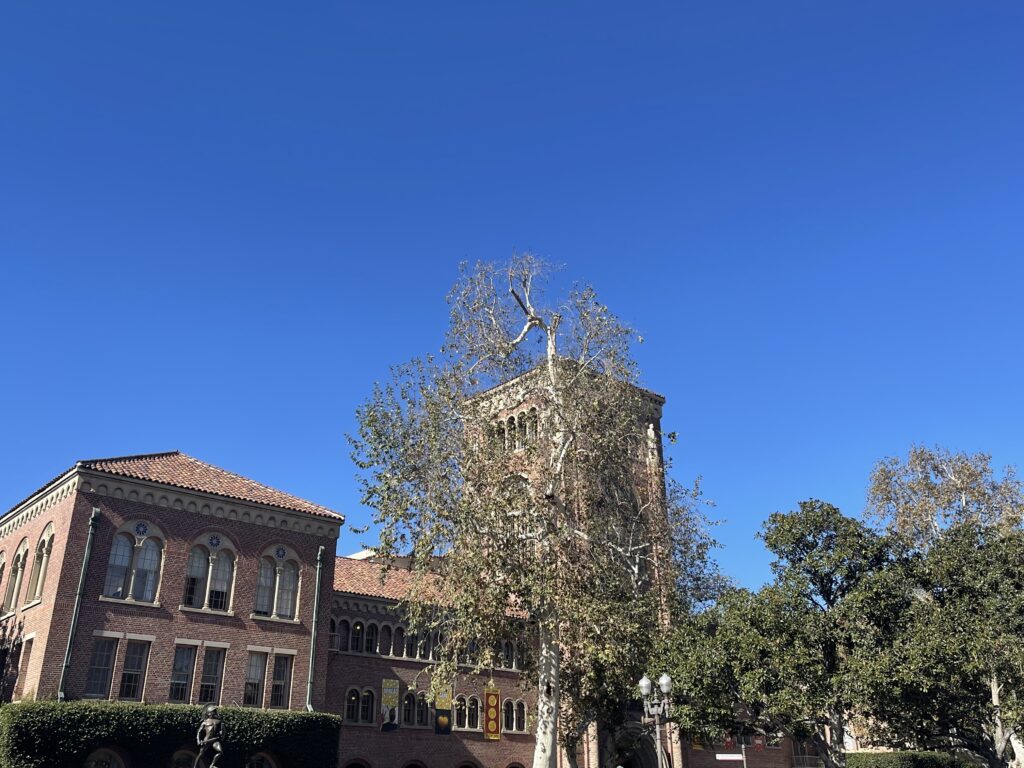
A Trojan – the USC mascot – stands guard over the center of campus.

Occidental College

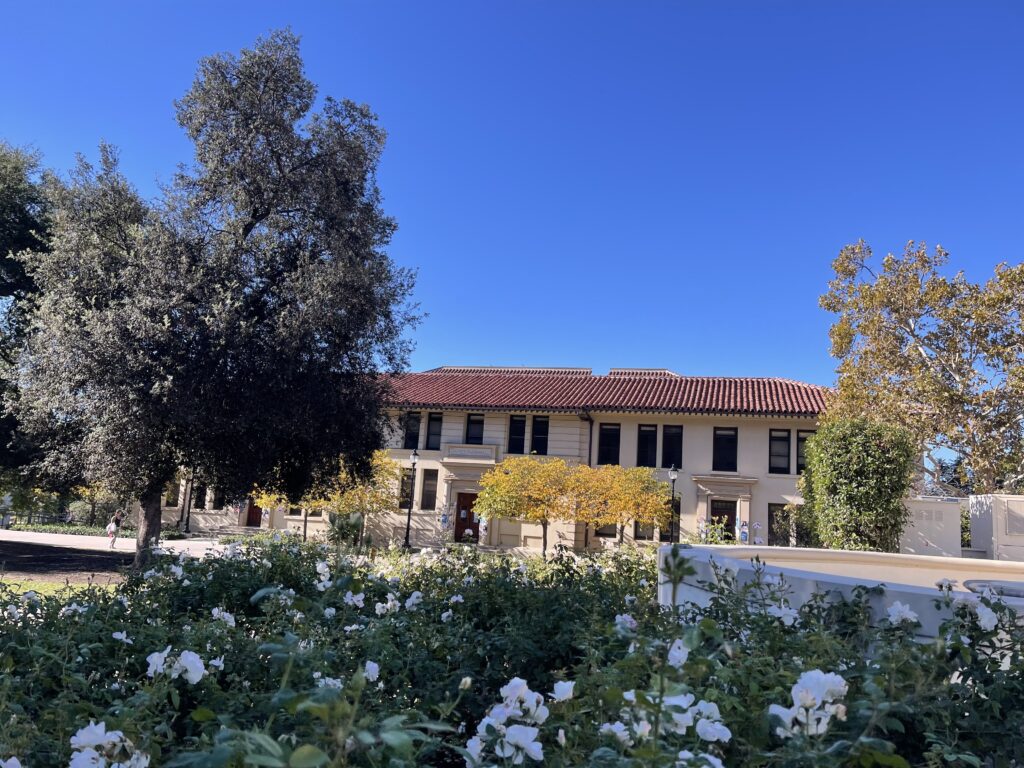
I recently visited Occidental College in Los Angeles, where I toured the campus and spoke with the admissions office about the latest trends in admissions. Here are some takeaways from my visit:

· Programs at Occidental frequently feature an experiential, hands-on requirement. A popular music production industry practicum through Warner Music, for instance, counts toward the Occidental degree, and even philosophy majors must satisfy an experiential requirement.

· The most popular major is Economics, followed by Diplomacy. Unique degree programs include Urban and Environmental Policy and Music Production.

· Two signature programs are Oxy’s residential UN program, where students spend one semester working at the UN, and the Campaign Semester, where students spend a semester working on a campaign somewhere in the United States.

· The average class size is 18, and faculty are highly accessible and supportive.

· Despite being in a major city, Oxy is located in a suburban area of LA and most students live on the scenic campus all four years. On a typical Saturday night, around 70% of students stay on campus and 30% go out into LA. As with most colleges in Los Angeles, students either have their own car or explore Los Angeles by getting a ride with a friend.

· There is a large focus on community service and social justice at Oxy.

· Seniors are required to complete a comprehensive project (often a senior thesis).

University of California San Diego

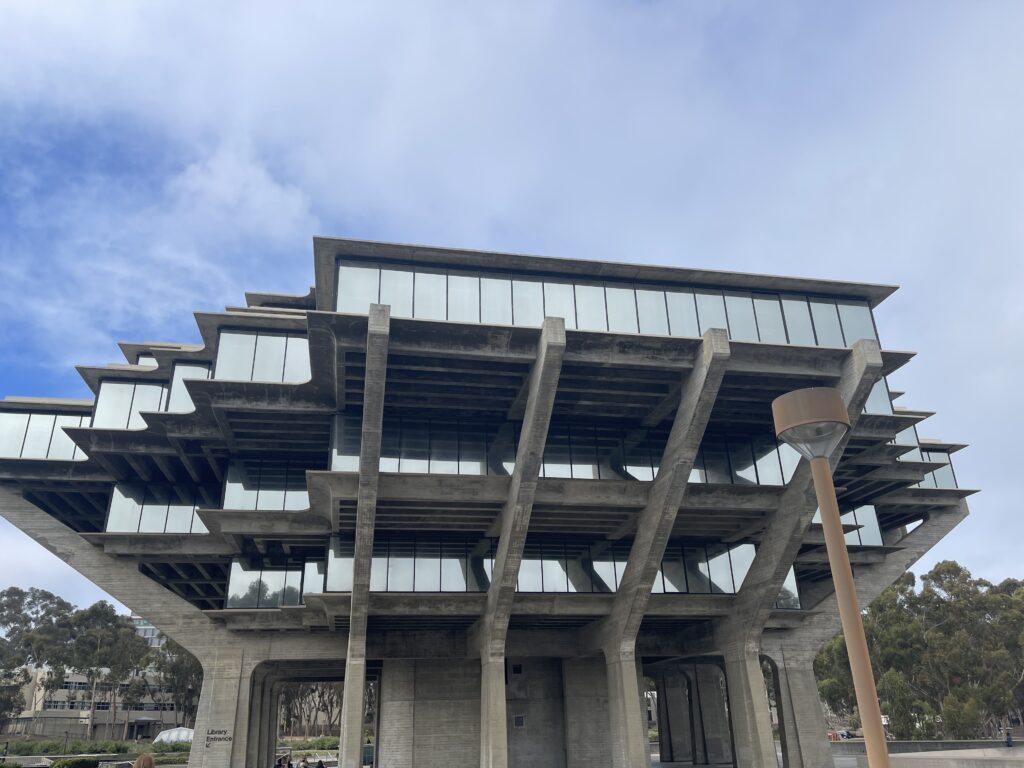
I recently visited The University of California San Diego (UCSD), where I toured the campus and spoke with the admissions office about the latest trends in admissions. Here are some takeaways from my visit:

· A distinctive feature of UCSD is its residential college system: students are assigned to one of eight colleges, where they live (as underclassmen) and receive academic support. Students should pick their residential college carefully by considering its theme, philosophy, gen ed requirements, location and amenities.

· Academics are rigorous (the school is on a quarter system), but the environment is not quite as intense as at some highly selective colleges.

· The middle 50% of enrolled students had high school GPAs between 4.12 – 4.3.

· Career counselors often come from industry. There are only 15 career advisors total, however, for all 33,343 undergrads.

· UCSD has the most extensive study abroad options of any UC campus, and the university offers extensive advising to help students plan their study abroad.

· UCSD is most well-known for its strengths in STEM, which a majority of students pursue.

· Top employers include Amazon, Google, Microsoft, Netflix and Tesla.

Gallatin School (NYU)

I recently attended an information session at NYU’s Gallatin School and spoke with the admissions office about the latest trends in admissions. Here are some takeaways:

· At Gallatin, students design their own major (called a “concentration”), which typically hovers around three different academic fields of interest. Distribution requirements are minimal. The focus is on thinking deeply and critically about one’s fields of study.

· Gallatin’s program is inherently interdisciplinary: students combine methods and topics from their various fields of study when approaching problems and designing academic projects.

· Gallatin students take Gallatin-only classes, capped at 22 students (but often having only 8-10), as well as classes across NYU. Most students take about half their courses at Gallatin and half elsewhere in NYU.

· In addition to Gallatin’s interdisciplinary seminars and advanced writing courses, students can take numerous arts workshops.

· Students can partake in both Gallatin-specific and NYU-wide clubs. The Gallatin School has its own performing arts theater and campus spaces.

· Gallatin’s admit rate is close to the university’s overall 12.2% acceptance rate, and the grades and test scores of its students are roughly similar to those of students in the other undergraduate programs.

NYU Visit

I recently visited NYU in Manhattan, where I toured the campus and spoke with the admissions office about the latest trends in admissions. Here are some takeaways from my visit:

· NYU has around 25,000 undergrads. Admit rates, which average 12.2% overall, are roughly comparable across undergraduate programs, although slightly lower at Arts & Sciences, Tisch and Tandon. The median SAT score is 1550 and median ACT is 35.

· NYU is globally-focused and has two degree-granting campuses in Shanghai and Abu Dhabi, plus 12 academic educational centers around the world where students can study. Financial aid and credits travel with students across the various campuses and educational centers. Some programs allow students to study abroad as early as their first year.

· First-year seminars often touch on the culture of NYC and turn the city into the students’ classroom.

· Housing is guaranteed all four years and underclassmen typically live on campus, but upperclassmen usually move off campus.

· At the Leslie Entrepreneurship Lab, students can utilize counselors, workshops and a production lab to explore and launch business ideas. Leslie also hosts a “shark tank” where students can pitch their project and compete for funding.

· NYU has dedicated $500,000 to funding undergraduate unpaid internship opportunities.

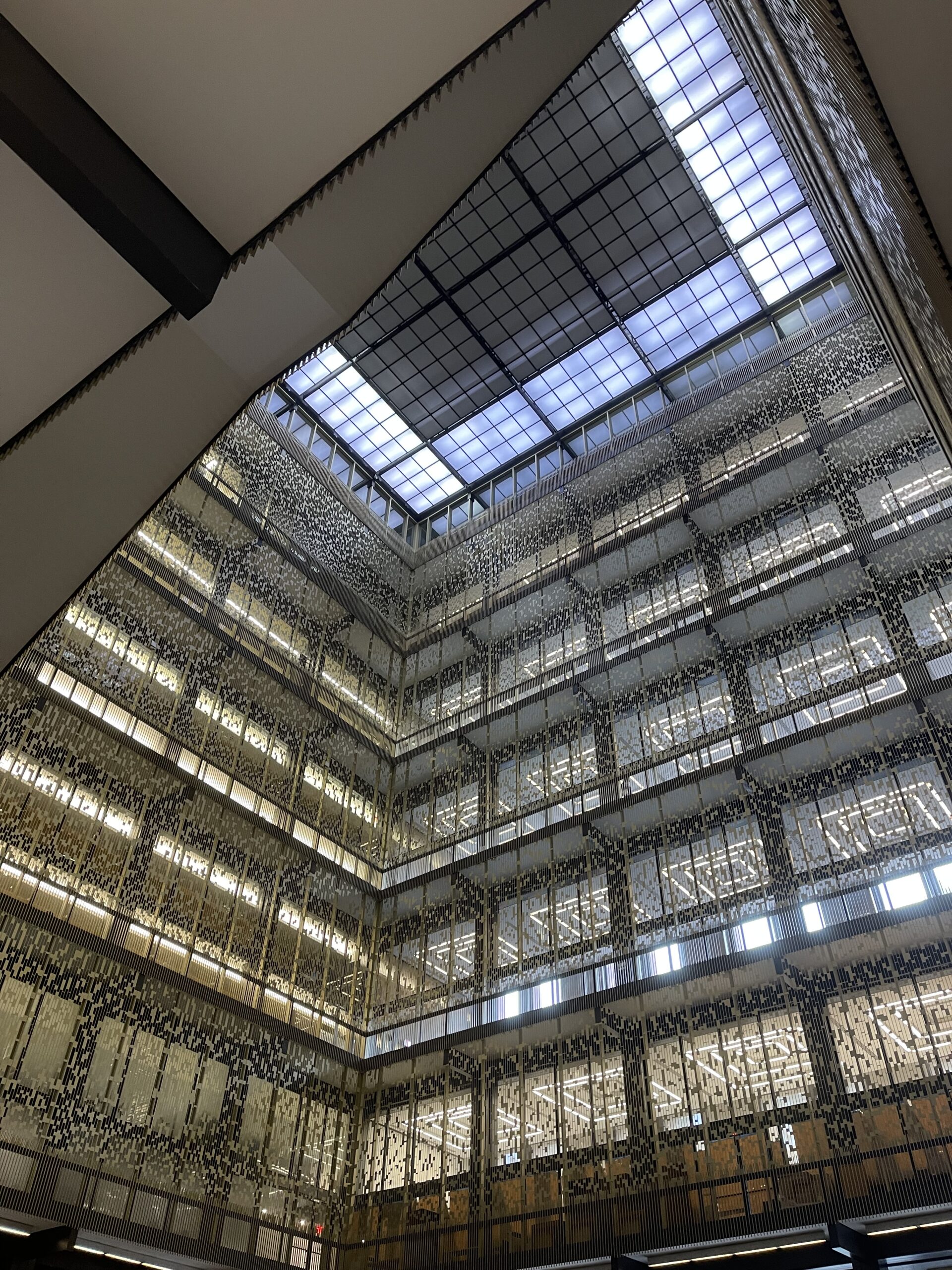
Inside Bobst, NYU’s main library.