Articles Written By: Robert Kohen

Princeton University

I recently visited Princeton University in New Jersey, where I toured the campus and heard from the admissions office about the latest trends in admissions. Here are some takeaways from my visit:

· Princeton distinguishes itself from many of its Ivy peers by its intense focus on undergraduate research and teaching. Students can become involved in research as early as freshman year, and research projects are required both junior and senior years. The campus lacks many traditional graduate schools (business, medicine, law), and the majority of students are undergrads.

· Because of Princeton’s unique senior thesis requirement, students can only major in one subject. There is also a narrower range of majors – 37 – than at many of the university’s peer institutions.

· While most classes are small, some lectures have up to 120 students (or, in the case of Introduction to Computer Science, 200).

· Students live in one of seven residential colleges their first two years but belong to the college all four years. Social life for the majority of upperclassmen centers around Princeton’s “eating clubs,” which each have their own culture and flavor.

· Princeton fields some of the strongest athletic programs in the Ivy League and has a total of 38 D1 teams and as many club teams.

· Students can opt for a fully-funded gap year abroad through the Novogratz Bridge Year Program. Students will complete a work project based on their interests.

· A unique feature of Princeton admissions is that they require a graded paper, ideally from within the last two years in English or history. Princeton will consider the writing within the context of the student’s high school.

· The optional interview is encouraged, and submitting an arts supplement “can only help” an application.

· Engineers also fulfill liberal arts distribution requirements but are exempt from the foreign language requirement.

· Princeton no longer caps the number of A’s at 35% of each class, but there is still some grade deflation in programs such as engineering.

· The entire campus is a 10-15 minute walk from one end to the other. Most students are not allowed to have cars on campus.

· Students can elect to take up to four classes in total pass/fail.

· A new art museum is currently under construction and the gym is undergoing renovations.

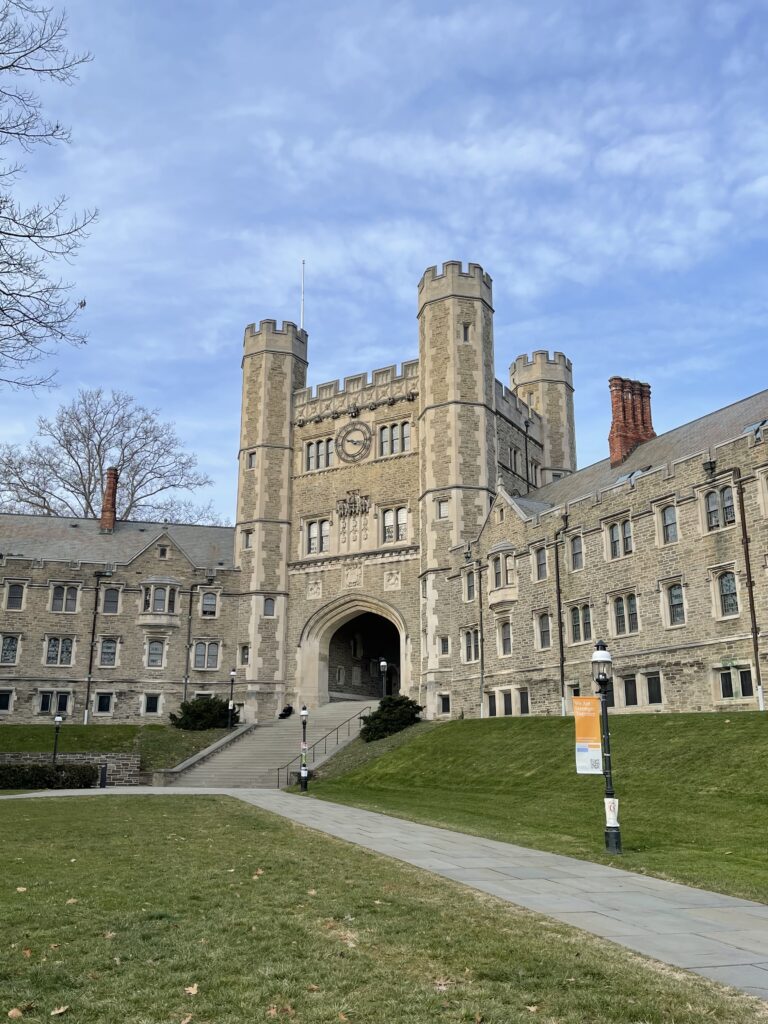
Mathey College, one of Princeton’s seven residential colleges.

Pace University

I recently visited Pace University in lower Manhattan, where I toured the campus and spoke with the admissions office about the latest trends in admissions. Here are some takeaways from my visit:

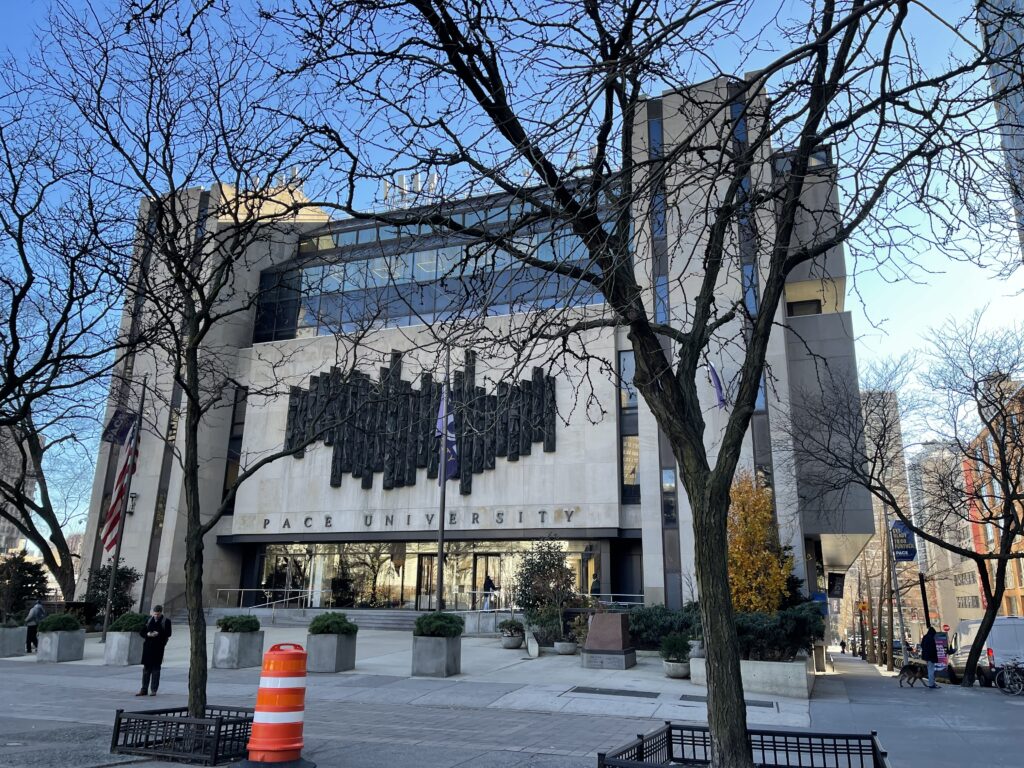
· With small classes, a compact campus (a five minute walk from one end to the other) and just under 6,000 students, Pace offers a less abrupt introduction to big city living than nearby campuses like NYU.

· While more traditional outdoor campus space is limited, there are various areas where students can congregate within Pace’s buildings, including a cafeteria, student center and library.

· The majority of undergraduates study in the Lubin School of Business, while a small contingent of students major in the highly selective School of Performing Arts.

· Some of the largest employers of Pace grads are Goldman Sachs, KPMG, NBC and Universal. Many students intern at the UN.

· Housing is guaranteed all four years. There is one traditional-style dorm (with common bathrooms and lounge spaces on each floor), and three quieter apartment-style dorms (with doubles/triples and a common space in the basement). A fifth dorm is in the works. 25-30% of students commute from home.

· There are various online learning options: some classes can be taken asynchronously, and others allow students to “Zoom in.”

· Around 3,000 undergrads attend the more traditional campus in Westchester, which is where the selective nursing program is housed. Sports are also present on the Westchester campus, but not the Manhattan campus.

· The university practices need-blind admissions, and SAT/ACT scores are not required for merit aid.

Loyola Marymount University

I recently visited Loyola Marymount University in Los Angeles, where I toured the campus and spoke with the admissions office about the latest trends in admissions. Here are some takeaways from my visit:

· Class sizes are small and faculty very supportive. LMU provides help for students who need extra support transitioning to college-level academic expectations.

· LMU admits by major. Admit rates for popular majors are lower than the college’s overall admit rate. Students can minor in any field at the university, except for film and television.

· LMU is a Jesuit university. Although the school does not have a strongly religious flavor, its students are very focused on the Jesuit traditions of service and social justice. There is a two-course theology requirement, but it can be fulfilled through a wide range of courses speaking to many different interests.

· LMU’s School of Film and Television is considered one of the top 10 in the nation.

· Housing is guaranteed for the first two years. Upperclassmen who want on-campus housing are usually able to secure it. Those who choose to live off-campus typically live no more than 10 minutes from campus.

· LMU has a joint 4+1 MBA program with Notre Dame.

· Double/triple majors and minors are popular since most majors only take one year to complete and most minors one semester.

· Students receive academic credit for internships, with many working in tech in the adjacent “Silicon Beach” neighborhood of Playa Vista.

Sacred Heart Chapel overlooks the center of campus at LMU.

California Institute of Technology

I recently visited The California Institute of Technology in the Pasadena area of Los Angeles, where I toured the campus and spoke with the admissions office about the latest trends in admissions. Here are some takeaways from my visit:

· Caltech provides an exceedingly rigorous STEM education for the most academically and intellectually inclined. 95% of students complete research as undergrads, and many go on to earn Ph.D.s. The fast-paced quarter system adds to curriculum’s intensity, and students take 4-5 classes (sometimes more) each quarter.

· With just under 1,000 undergrads, Caltech has a small, liberal arts college feel, despite being a leading STEM research university with Nobel Prize-winning faculty. Access to faculty and research opportunities abound.

· There is a more even balance between the sexes than in prior years: 55% of students are male, 45% female.

· Caltech students “surf” at various locations during the summer – that is, they propose and execute their own research projects with funding through the Summer Program Research Fellowship.

· The curriculum focuses on collaboration: students spend each week working on challenging problem sets that were designed to be tackled be a team.

· Students typically take one humanities or social science course each term to satisfy gen ed requirements.

· Students coming to Caltech without the requisite math – say with only AP Calc AB or not having taken AP Calc BC since 10th grade – are invited to a remedial math summer program before starting freshman year.

· Most students live on campus all four years. A unique feature of Caltech is its eight residential “houses,” which serve as social and academic hubs for students throughout their four years.

· Students declare a major at the end of their first year. There are no caps on majors.

· Many students are involved in the nearby Jet Propulsion Lab (JPL), which Caltech operates jointly with NASA.

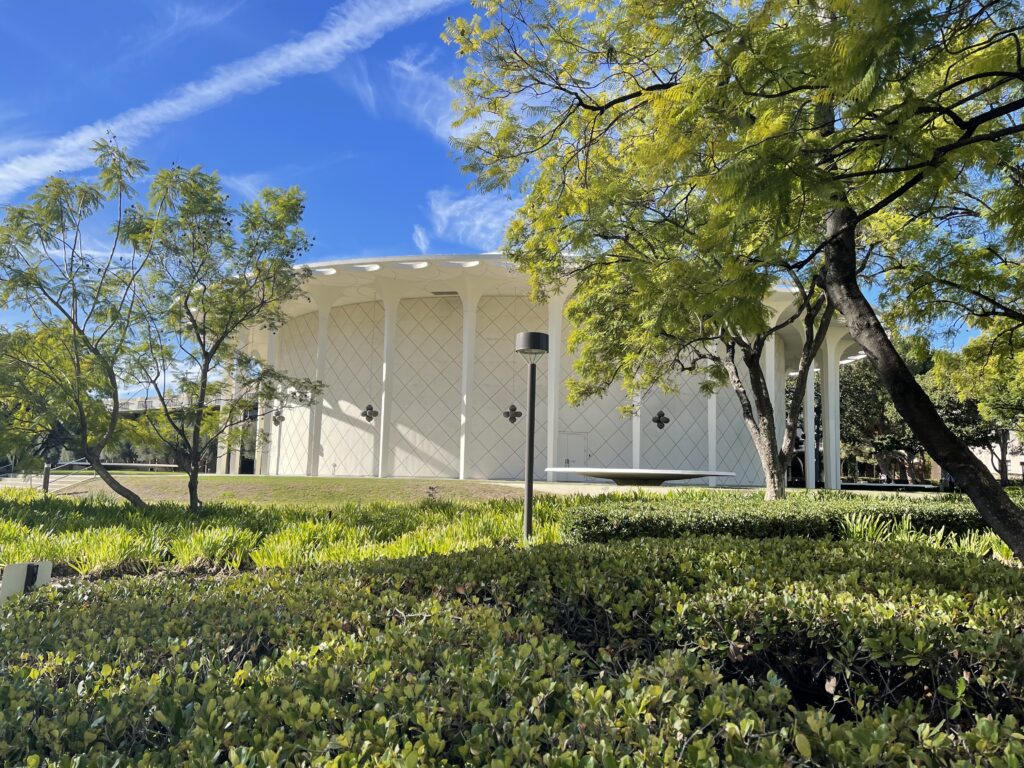
The Beckman Auditorium, with its signature p orbitals.

Pepperdine University

I recently visited Pepperdine University in the Malibu area of Los Angeles, where I toured the campus and spoke with the admissions office about the latest trends in admissions. Here are some takeaways from my visit:

· Pepperdine is affiliated with the Churches of Christ and has a pronounced Christian focus: students must attend chapel multiple times each semester, complete three religion courses (Old Testament, New Testament, Christian Culture) and abstain from overnight dorm visits. The campus is dry, and Bible study is a popular social activity. 70% of students are Christian. Mental and emotional support is provided in part by a spiritual life advisor.

· Engagement with a church community in high school is a plus, so highlight this on your application if applicable. If a student is a member of the Churches of Christ, their minister can submit a letter of recommendation and they may be eligible for a special scholarship.

· The average class size is 19 and there are no TAs. 35% of faculty live on campus, often inviting students into their homes for Bible study. Students participate in research as early as freshman year.

· Business is the most popular and well-known program. Students can complete a joint 5-year BA-MBA, all at Pepperdine.

· The communications major is also popular, and there is a student broadcasting network on campus.

· On-campus housing is required the first two years and optional (but not difficult to secure) the final two years.

Pepperdine’s Malibu location – set in the hills overlooking the Pacific Ocean – counts among its greatest assets.