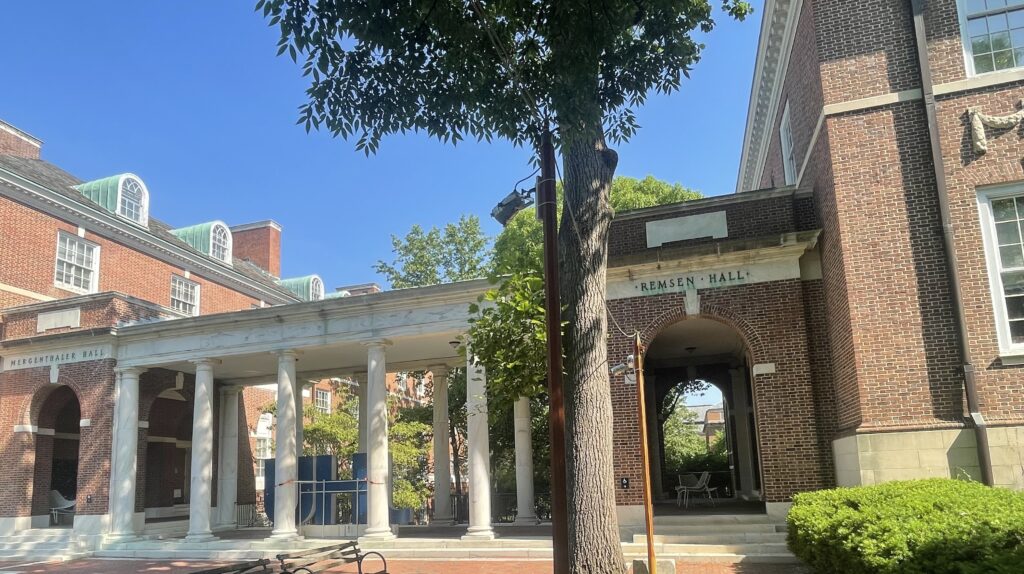
The George Washington University

I recently visited George Washington University in Washington D.C., where I toured campus and spoke with the admissions office about the latest trends in admissions. Here are some takeaways from my visit:

· George Washington University is a mid-sized private university of around 11,000 undergrads located right in the nation’s capital, only five minutes from the White House.

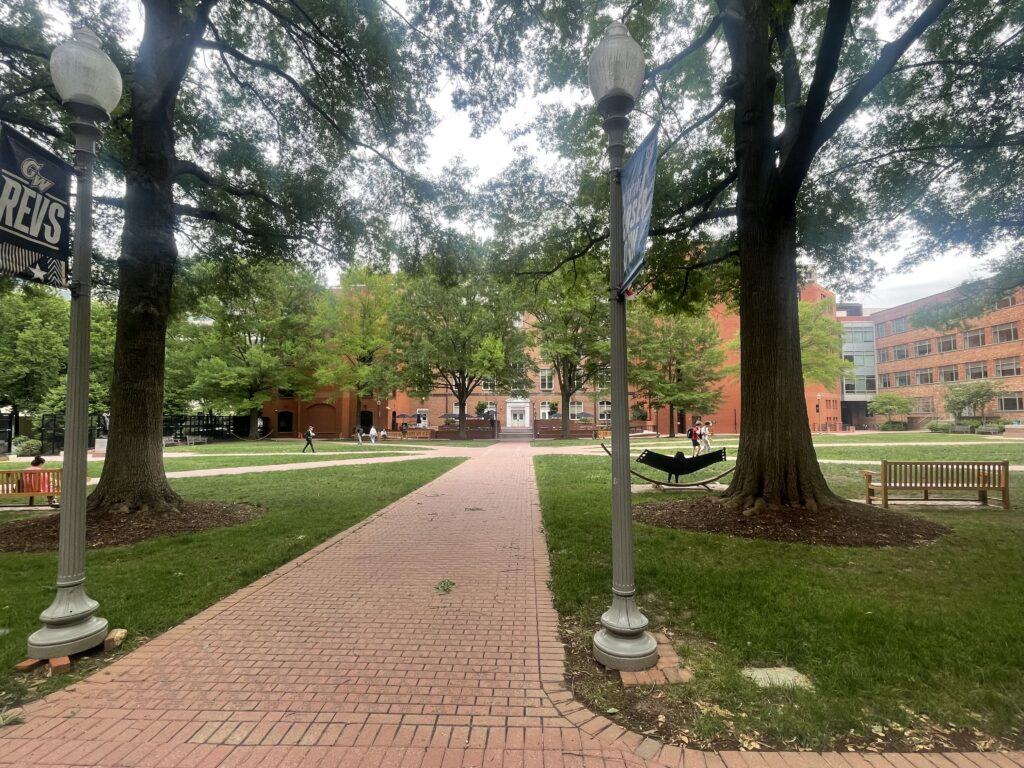
· At GWU, much like NYU, the city is the campus. The green Mid-Campus Quad, however, provides a small sense of seclusion from the hustle of the city that pervades the rest of the campus. Freshmen can also opt to live on the more traditional Mount Vernon campus (“The Vern”), which is served by a bus connecting it to the downtown campus.

· Students at GWU take advantage of the school’s prime location to secure internships (nearly three-quarters intern), which can be completed during the semester for academic credit. The career center brings first-year students in to learn about their resources through a partnership with the first-year writing program. One-third of alumni live in DC, so GWU can be a great choice for students interested in building career connections in the city.

· Classes run small: 71% are under 30 students, with the average class running 29 students. The largest lectures reach up to 150-200 students.

· GWU is well known for its School of International Affairs, a top program in its field that is located directly across the street from the State Department and offers over 20 concentrations to choose from.

· For those looking to spend extensive time abroad, GWU offers a global bachelor’s program where you spend three semesters of study abroad on at least two different continents, as well as the ACE Cohort Program that takes international business students to Italy and Beijing for one year each.

· The arts are not neglected at GWU: there are multiple theater and music productions throughout the year (students don’t need to be a major to join), and multiple arts degrees are offered in the form of BAs and BFAs. Student performances are popular on-campus events, although students also explore DC together in their free time. While there is no football, sports are D1.

· Unsurprisingly, students here are very interested in politics, and the university houses the largest College Democrat, College Republican and Independent student groups of any college.

While GWU’s campus is largely the city of DC, the Mid-Campus Quad provides a green respite from the hustle of the streets.

Haverford College

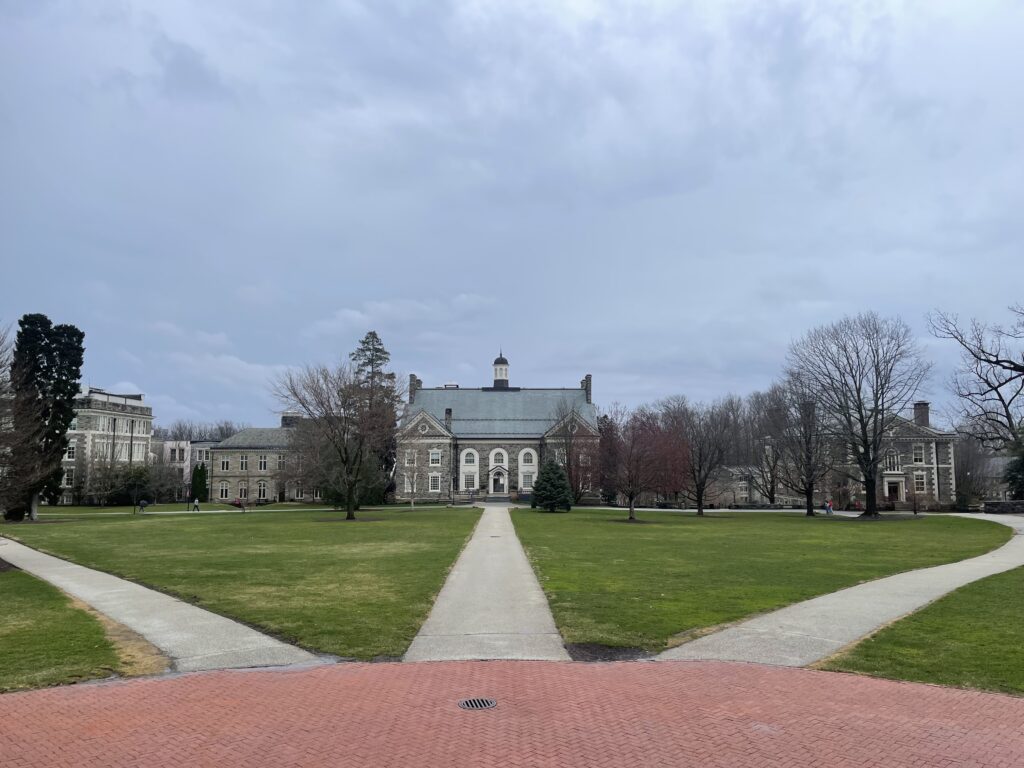
I recently visited Haverford College in Haverford, PA, where I toured campus and learned about the latest trends in admissions. Here are some takeaways from my visit:

· Haverford is a small, tight-knit, academically rigorous liberal arts college. Whereas most liberal arts colleges sit removed from large cities, Haverford is right on the outskirts of one of America’s largest cities, Philadelphia. Three train stations within walking distance of campus can shuttle students in under 30 minutes to downtown, where internship and service opportunities await.

· While Haverford has only around 1,500 students, its partnership with Bryn Mawr College just down the street helps it feel larger. Students can take classes and major at either college, and a seven-minute bus shuttle runs regularly between the two campuses. Slightly further afield, Swarthmore and UPenn also offer curricular opportunities for Haverford students, although UPenn courses are only offered in instances in which the same course isn’t offered by one of the other three colleges (Wharton courses are popular for this reason).

· Haverford students are given a great deal of agency over their education. The school runs on an Honor Code, exams are self-proctored, and at Plenary each semester students convene to discuss and shape various campus governance policies. All students must complete a senior thesis.

· Unlike most colleges, Haverford offers a large number of singles, which make up 68% of all campus housing. Every dorm also has AC. Nearly everyone lives on campus all four years, and freshmen are assigned to a “Customs Group”–a starter orientation and dorm friend groups that come with three upperclassmen mentors.

· 30% of faculty also live on campus, contributing to a strong culture of mentorship. Collaboration is also a notable feature of academic life here: STEM homework assignments, for instance, ask students to list their name and who they worked with, as collaborative work is simply expected. Classes are small, with the largest intro lectures being capped at 25-30 students.

· Although students work hard, campus life is robust with over 145 student clubs and organizations, numerous campus events and various student recreation spaces.

Fordham University (Lincoln Center)

I recently visited Fordham University’s Lincoln Center campus in Manhattan, where I toured campus and spoke with the admissions office about the latest trends in admissions. Here are some takeaways from my visit:

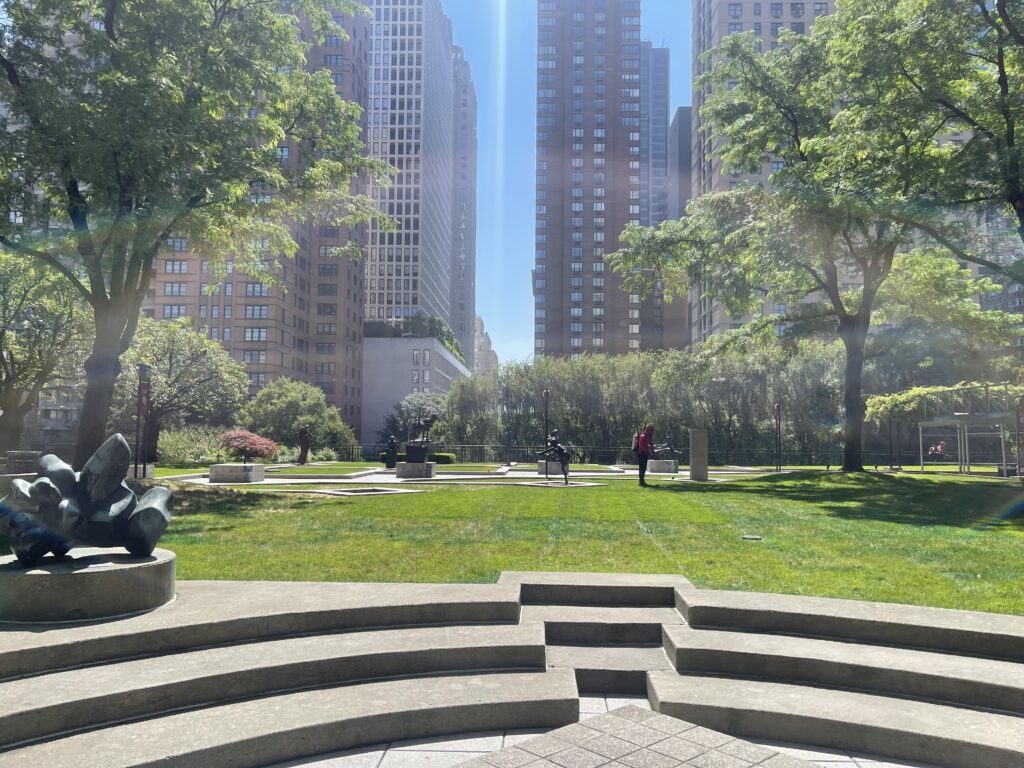
· Fordham’s Lincoln Center campus, located on Manhattan’s Upper West Side, offers a truly big city college experience to roughly 3,000 undergraduates. The tiny two-block campus, made up of only a few academic and residential buildings, features one central elevated green space that connects the campus’s two main academic buildings. The emphasis here is clearly on the prime New York location, though, rather than the campus itself.

· Although students can ride the “Ram Van” to Fordham’s more traditional Rose Hill campus in the Bronx (and some do for occasional classes and to catch sports games), Lincoln Center students spend most of their time in Manhattan and have everything they need–from libraries, dining halls, a gym and health services to extensive student organizations (including a Lincoln Center campus newspaper)–for a full college experience right where they are.

· Housing is guaranteed all four years. 80% of freshmen live on campus, and roughly half of students remain on campus through senior year. Underground tunnels connect the various buildings.

· The Lincoln Center campus lacks the Greek life and sports experience available on the Bronx campus. While there are activities on campus for students on the weekend, many students here take advantage of the Manhattan location to get out and experience all the city has to offer.

· For business students, the Lincoln Center campus offers three majors: Digital Media and Technology, Finance and Marketing.

· Fordham’s dance and theatre programs are located exclusively at the Lincoln Center campus. The dance program offers a BFA in partnership with the neighboring Ailey School.

· At Lincoln Center, the average class size is 22, and classes are capped at around 30 students. The curriculum is primarily discussion-based.

· Although a Catholic institution, students from all backgrounds–including atheist, Jewish and Muslim–report feeling welcome. There is a rabbi and imam on campus, and there are also Jewish and Muslim pride rooms and campus celebrations.

Lehigh University

I recently visited Lehigh University in Bethlehem, PA, where I toured campus and learned about the latest trends in admissions. Here are some takeaways from my visit:

· Well-known for its engineering programs, Lehigh also offers majors in business, the liberal arts, education and health, along with a variety of interdisciplinary programs. Its 6,000 undergrads are granted a good deal of flexibility to explore and combine subjects during their time at Lehigh. Classes average 30 students but can range from approximately 12-150.

· Career services are rated unusually highly by students, 91% of whom intern or complete some form of experiential learning. The career center does active outreach to companies, and some courses even connect students directly to internships.

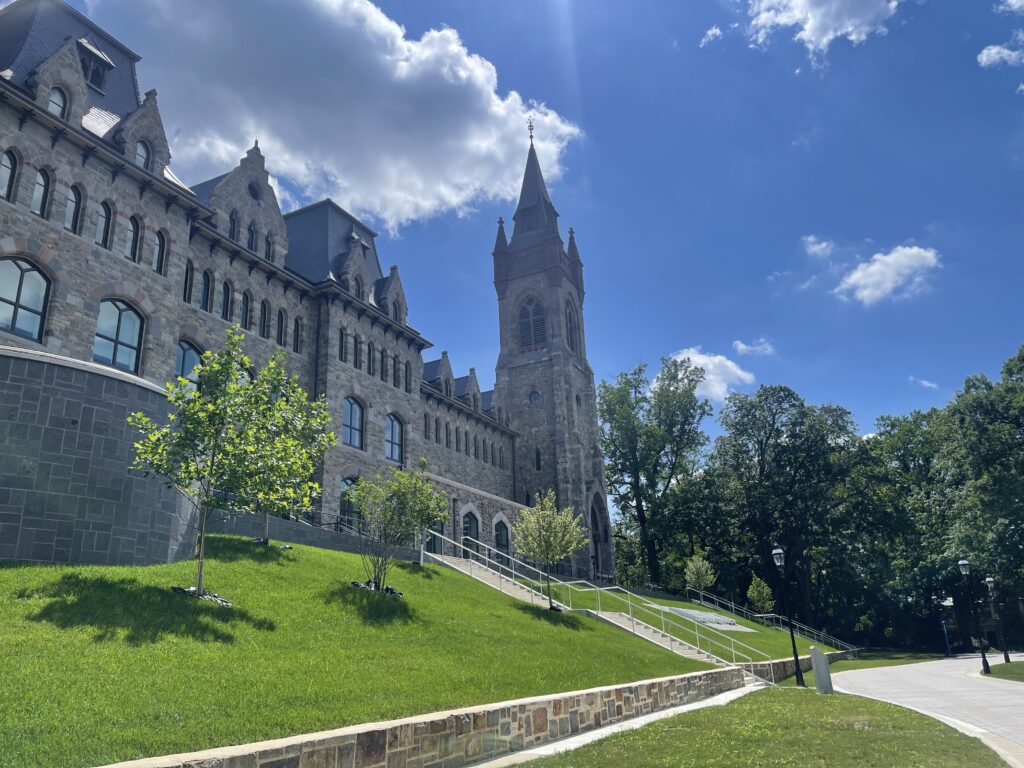
· The campus, a mix of gothic stone structures and more modern buildings, is built into a hill on the south side of Bethlehem, a historic, walkable and picturesque small city that once hosted Bethlehem Steel (now the site of a large arts center and prominent annual music festival). Students can easily walk into the city, where over 30 types of international cuisines are available within five minutes of campus. Bethlehem is only 90 minutes from NYC and 70 minutes from Philadelphia.

· The campus is very residential: students are required to live on campus their first two years, and while most students move off campus by senior year, many live in student-only buildings adjacent to campus. Greek life is popular (30% join), but students report that you don’t need to participate in order to enjoy Lehigh’s active student life. Lehigh’s 160-year-old rivalry football game with neighboring Lafayette is a major annual event.

· Academics are rigorous but often collaborative. There are extensive research opportunities beginning freshman year, including for student-directed research.

· The College of Health offers a range of unique public health aligned majors like biostats and population health. Premeds benefit from the extensive network of healthcare institutions in the Lehigh Valley and Lehigh’s proximity to St. Luke’s University Hospital, Temple’s teaching hospital.

University of Hartford

I recently visited The University of Hartford in Hartford, Connecticut, where I toured campus and spoke with the admissions office about the latest trends in admissions. Here are some takeaways from my visit:

· The University of Hartford is a private university enrolling around 4,000 undergrads and another 1,700 graduate students. It is located in a suburban, upscale neighborhood in West Hartford near the city limits, about two hours from both Boston and NYC. While 37% of students commute from home, 60% spend all four years on this green, 350-acre residential campus, which guarantees housing. There are 120+ clubs and 400+ yearly campus performances.

· The average class size is 14, with some popular intro courses only maxing out around 30 students. Faculty get to know students and help them get involved in research and internships.

· The university offers a range of majors, including many pre-professional ones: nursing, engineering, business, OT, physical therapy, and a BA in architecture. A new building for health professions and engineering is in the works, a wind tunnel serves aerospace students, and a sim suite supports nursing students.

· There are accelerated degree programs available to students in education, occupational therapy, physical therapy and more: BS/MEd (4+1), BS/MS in OT (3+2), BS/DPT (3+3) and BS/MS in Prosthetics and Orthotics (3+2)

· The university’s Hillyer College offers extra tutoring, study skills classes and small class sizes for interested students freshman and sophomore year. Students can also take part in the free Summer Bridge program to help better prepare for the transition to college.

· The business school has a partnership with Black & Decker, where many students intern. A 3+1 MBA pathway is also offered. Other local university partners include Aetna and Cigna.